“I’ve learned that people will forget what you said, people will forget what you did, but people will never forget how you made them feel.” Maya Angelou
********************************************
I’ve had many jobs and even more bosses. My first gig was at Yogurt Express at Dayton’s Department Store in downtown Minneapolis. I was 16 and I loved my job. My boss, Daniel, was another story. All these years later, I still remember him as not only my first supervisor, but also my worst.
He became accusatory one day, confronting me about the till being short. He wanted to know why. I had no idea. All I knew was I didn’t steal, as he insinuated. I don’t remember what he said the day he pulled me into the tiny closet for the unexpected interrogation. But, true to Maya Angelou’s words, I’ve never forgotten how he made me feel: Small. Inadequate. Ashamed.
Fortunately, the good bosses I’ve had far outnumber the bad. While I don’t have the space to mention them all (I wish I could!), I’ll highlight a few.
Raelin Storey hired me at KCCO in Alexandria in 1994. She brought me on as a production assistant and later gave me my first on-air reporting position. Rae was young, but kind, smart and talented.
Raelin Storey was my first on-air boss at KCCO in 1994. We’re still in touch.
Our market covered a huge area, dozens of counties, and we were one-person bands—shooting, writing and editing our content. While she taught me much, one lesson really struck a chord.
I had driven two hours, each way, for a story. It was big, maybe the lead that night. As I headed back to Alexandria, I questioned whether or not I had white-balanced the camera before shooting. If you don’t white balance, your video is blue and your story looks like it was produced by a fifth grader. By the time I got back to the station, anxiety consumed me. With tears swelling in my eyes, I ran into the editing bay, stuck the tape in the machine and hit play. To my relief, it was clean.
Rae recognized my distress. “Karen, what’s wrong?” she asked. I explained my perceived predicament.
While I don’t recall the entire conversation, I remember the crux: “We’re not doctors. No one will die if we mess up.” And I remember how I felt: Human. Safe. Supported.
Rae taught me it’s okay to make mistakes. I’ve shared that message many times, always crediting my first on-air boss for the simple, yet powerful, gem.
After Rae, I had other great bosses, including Lynne Berry Vallely. We originally met when I was a reporter. I interviewed her for a riveting story on allergies.
Lynne Berry (l) was among my great bosses (shown here w/a few members of my amazing HudsonAlpha team), but also became a mentor in philanthropy.
Our paths would cross occasionally over the next 15 years, but she came into my life in earnest while I was at HudsonAlpha. She joined the Institute as a colleague and later became head of our advancement team.
Before she came on board, I had already gravitated toward planned giving. I loved taking philanthropy to this very meaningful level. Lynne mentored me during this time and, at one point, promoted me to Director of Annual and Planned Giving.
She taught me that I was capable of more than I realized and gave me the opportunity to prove it, to others, yes, but also to myself. I remember how I felt: Empowered. Capable. Supported.
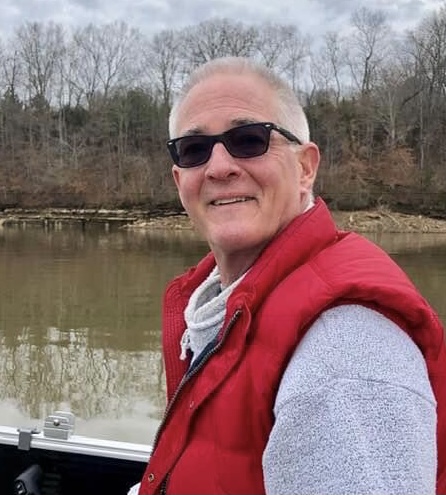
Danny Windham joined HudsonAlpha as my boss in 2019.
Lynne left after a few years, and Danny Windham became our boss in 2019. The retired engineer had a long and successful career in Huntsville’s tech industry, and had served on the Institute’s board since its beginning. As HudsonAlpha’s COO, Danny would now oversee operations and lead several teams, including ours.
Danny made an effort to really get to know his employees. He engaged us in conversation and listened intently. He was as kind and thoughtful as he was strategic and analytical. He had an open door policy and promoted direct, honest dialogue.
In July 2020, I had the opportunity to take a position in a different field. It was at the height of COVID so I told him over Zoom. Before accepting my resignation, he asked me questions. Lots of them.
“I’m scared to death,” I finally admitted.
“Let’s talk about that,” he said. I shared my insecurities about leaving an established organization (after nearly 11 years) with fantastic people and unbelievable benefits. I was headed to a startup drug and alcohol addiction treatment center.
We made a deal. If, after another 24 hours of contemplation, I changed my mind, “then lucky us,” he said. If not, they’d respect my decision to leave and wish me well. I ultimately chose the other job, but I did so knowing I had given it my utmost consideration.
Again, I remember how I felt: Valued. Decisive. Supported.
The job didn’t work out as expected, and I landed in the nonprofit mental health and addiction space as WellStone’s Director of Development. I got lucky with my boss here, too.
So what do all these great bosses have in common? Sure, they’re smart and they have vision, but more importantly, they treat their employees with respect and dignity—as human beings—whether they’re giving them a pat on the back or addressing a costly blunder.
If you’ve had bosses like Rae, Lynne or Danny, chances are you fondly remember how they made you feel at one time or another. And you do your best, every day, to have the same impact on others, no matter what their position. Or yours.
For years, I’ve been in the “eliminate stigma” camp when it comes to mental illness and addiction. After all, I struggled with undiagnosed ADHD, non-hyperactivity, and general anxiety disorder from childhood into adulthood. Along the way, I self-medicated with alcohol.
It took me a long time to get help, especially for addiction. I was terrified people would find out. As I shared before, I suffered from alcoholism for 15 years before spiritually flatlining in 2002. (This June 21, God willing, I’ll celebrate 20 years.)
Mental illness and addiction shaped me, so it makes sense that I wanted to make a difference in this space. When I had the opportunity to join WellStone, the nonprofit mental health center serving Huntsville, Cullman and surrounding communities, it was like coming home. I feel extraordinary amounts of empathy for those struggling with mental illness and substance use disorder (SUD). When I see people hurting, I hurt. When I see people resisting recovery, especially because they’re afraid of what others might think, I wish I could change their minds.
Back in my TV reporting days, before I went to treatment.
I was a reporter for a local TV station when I went to treatment. Before embarking on this journey, I told my news director and GM. There was no announcement or goodbye when I left, but tongues wagged. A friend, who has since passed, called me when I got back. “Are you okay?” he asked. The rumor was I’d had a nervous breakdown.
No, Tony. I didn’t have a nervous breakdown (although I certainly could have). I was grateful for his concern. He was one of three friends to call. I remember two cards, one from my sister, Heidi, and another from my husband, David. They contained powerful quotes that still inspire me:
“Go out on a limb; that’s where the fruit is”
“Leap and the net will appear”
Another TV personality went public with her breast cancer diagnosis several years earlier. Her courageous battle became the subject of news stories and led to North Alabama’s largest 5K. I point this out only to demonstrate how differently we respond to diseases of the body versus disorders of the mind. It never occurred to me to share my story with colleagues, let alone viewers. Addiction was shameful. Why tell anyone other than my innermost circle that I needed this kind of help? That I had this kind of problem. This kind of pain. Yet, by sharing her story, the other journalist, whom I greatly admire, raised significant funds for—and awareness of—breast cancer. Shouldn’t we do the same for mental illness and substance abuse?
Yes! That, in part, is why I became more vocal about my own struggles, first when I worked at an addiction recovery center, and now as Director of Development at WellStone, where I’m raising money for a crisis diversion center, and as a board member of Not One More Alabama.
I had an a-ha moment recently. Patty Sykstus, co-founder of NOMA, Daniel Adamek, founder of Little Orange Fish and I were brainstorming one day. Daniel said he was frustrated with the distinction between physical and mental health. “We’re looking at it all wrong.”
“That’s it!” I exclaimed.
“Great,” he laughed, “Then please explain it to me.”
Health is health. It involves the physical and the mental (and spiritual, if you want to go deeper). Very few people go their entire lives without an ER visit, so why should a mental health crisis be such a stretch? We shoot for annual checkups with our GP. Why not have our mental health evaluated from year to year with a psychiatrist? How many of us haven’t tripped on a rock and sprained an ankle or split a chin open? It seems reasonable, then, for us to go through rough patches in life, take a figurative fall, and need stitches for the mind, so to speak, from a mental health professional. We all need help healing.
Some people have diabetes, a chronic disease that requires a lifelong management plan. That’s often the case for people with chronic mental illness, whose treatment can include a lifetime of therapy and/or medication. Then there’s addiction. After nearly two decades, I still go to 12-step meetings. We don’t “graduate.” Meetings are part of my treatment plan. Meetings are essential to my health.
What about prevention? As awful as they are, we get colonoscopies. If there are signs of cancer, patients are treated accordingly. What if annual mental wellness check-ups could help identify mental illnesses before they advanced? That could potentially mean the difference between depression and major depression or even suicidal ideation and suicide.
Mental illness and addiction are hard for people to wrap their heads around. It’s easier to grasp diseases with tangible symptoms, like a tumor on an MRI or a fracture on an X-ray. But symptoms of mental illness show up in what are often erratic behaviors that are difficult to comprehend. And tolerate. (Worth noting: technology is evolving, and experts say some mental illnesses can now be diagnosed through MRIs. Scientists also recently identified a biomarker in people with major depression and for the first time observed brain signals associated with obsessive-compulsive disorder.)
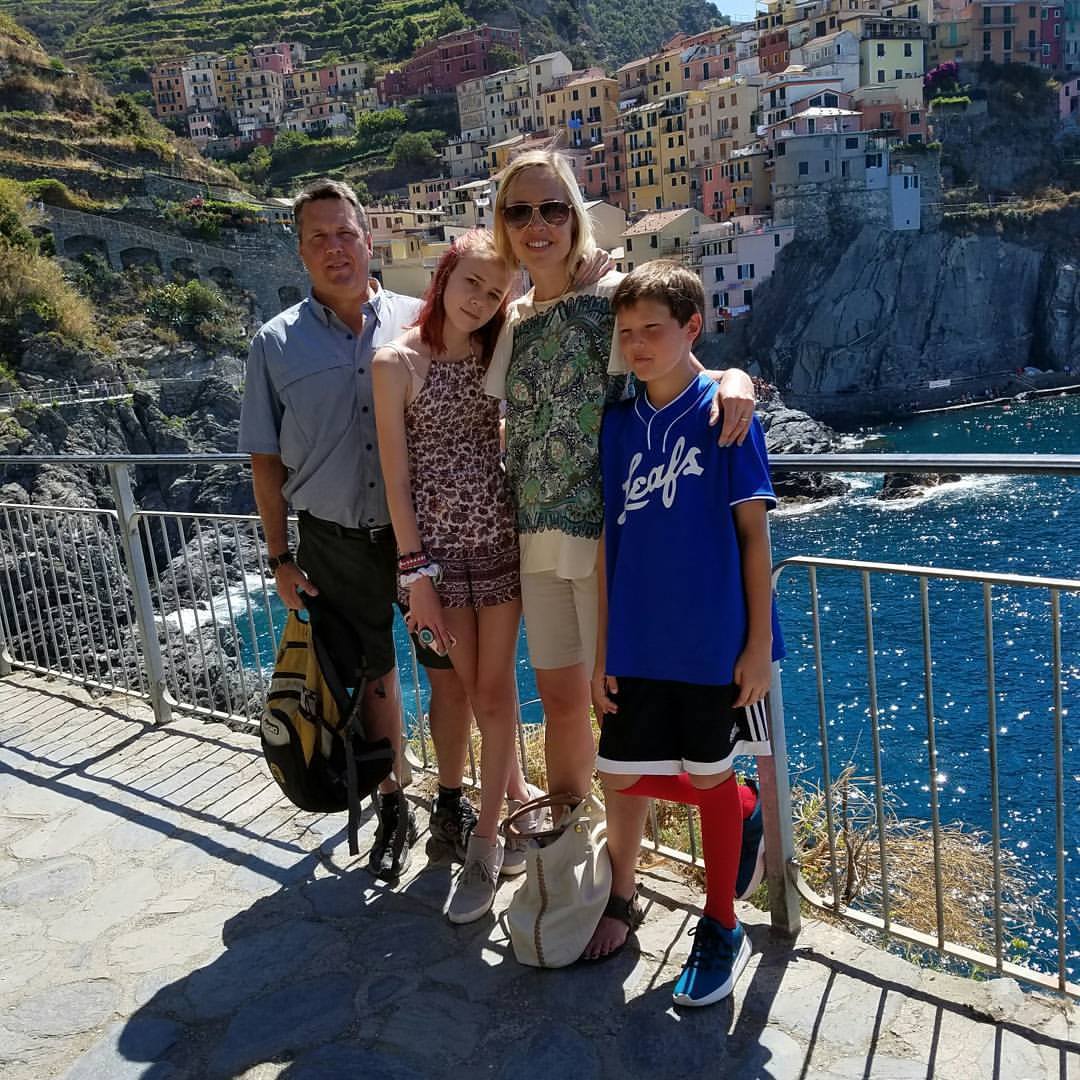
We try to assess–and address–the physical and mental health needs of the entire family.
There’s no question I inherited substantial risk factors from my late parents. Just like David has a family history of heart disease, I have one of mental illness and substance abuse. It stinks that the odds are against us genetically. It troubles me more, though, that we have passed these increased risks onto our daughters. It’s no one’s fault. It just is.
So what do we do? We monitor our health and theirs. We see doctors who specialize in mental and physical health.
Because health is health. Illness that affects one over the other isn’t a reflection of the person, but a result of the human condition. Sometimes the body gets sick. Sometimes it’s the mind that suffers.
In my early 20s, I went out with a nice guy. Over dinner, he shared that he was on Zoloft for depression. I recoiled. For starters, that’s not first-date material. Secondly, I was rife with judgment. I didn’t want to date someone with a mental illness.
Years later, my husband and I were newlyweds living in Albany, GA. I came home from work one night to find David sitting by a pyramid of empty beer cans. He had lost his job and plowed through the better part of a 12-pack. “Great,” I thought. “I married an alcoholic.” (I hadn’t.)
In both cases, I was looking in a mirror. Drenched in denial, I refused to recognize my own reflection. I bought into society’s stigma of mental illness and addiction and wanted no part of it.
**********************************************
People living with mental illness and/or addiction know they aren’t alone. Plenty of celebrities have come forward with their diagnoses. Earlier this year, NBC’s Carson Daly shared his struggle with debilitating General Anxiety Disorder. Actress Jada Pinkett Smith has revealed her history with depression and suicidal ideation. Additionally, in 2018, TV journalist Elizabeth Vargas revealed her battle with alcoholism and her dual diagnosis of depression.
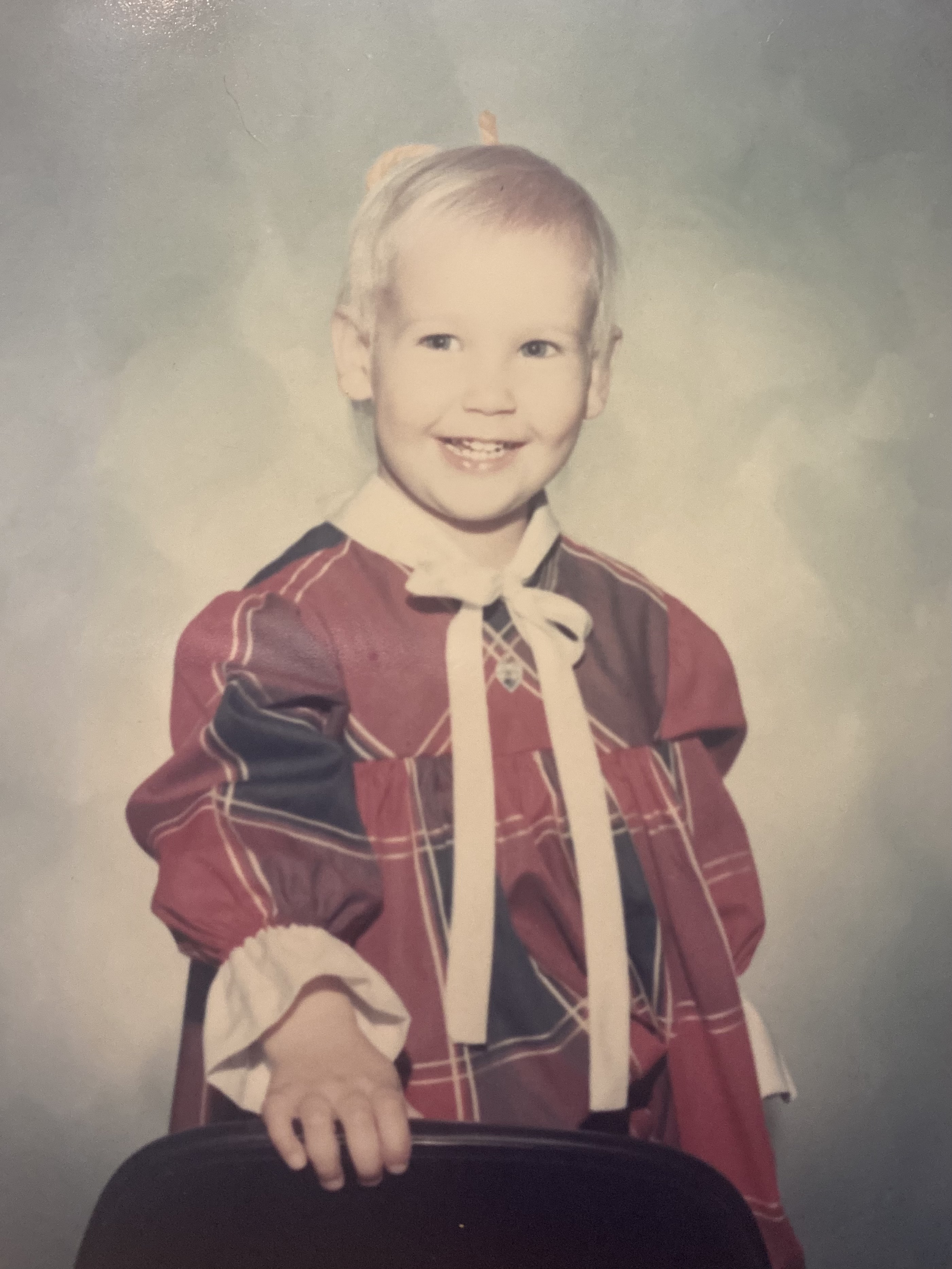
I smiled big as a kid, and was so happy. But as I grew older, my positive exterior didn’t always reflect my internal reality.
We commend these folks for their honesty, but wonder about the ordinary people in our lives. How many of them face anxiety, despair, obsessive thoughts, compulsive behaviors, suicidal ideations, an inability to focus, and/or addiction to drugs or alcohol (clinically referred to as substance use disorder, or SUD).
A lot, especially during the pandemic. But too many still feel alone — shame and isolation exacerbated by stigma. I know. I’ve been there.
I had a great upbringing with plenty of love, support and opportunity. By all appearances, I was a happy kid, teen and young adult. Convincing as it was, my positive exterior didn’t aways reflect my internal reality.
I felt different, uneasy in head and heart. At times, the wires in my brain moved erratically, spinning in different directions at varied speeds. Occasionally, I’d short-circuit, crying hysterically and finding relief — and release — in a flood of tears.
Don’t get me wrong. I often felt genuine joy in my heart and still do. But for years it was at odds with emotive forces I couldn’t comprehend. Our brains are just a fraction of our total body weight, but when there’s mental illness, the “glitches” in that complex organ threaten our entire well-being.
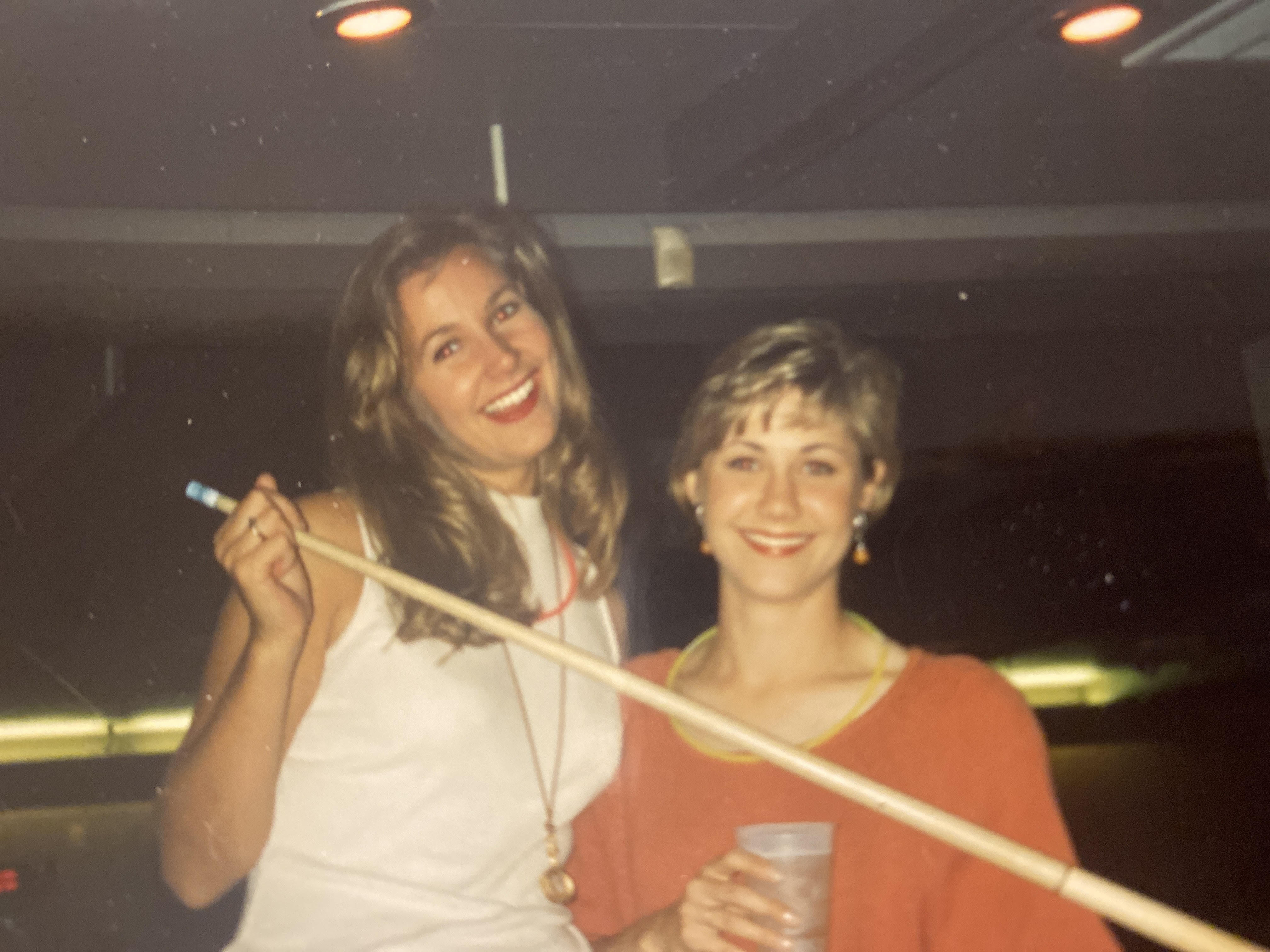
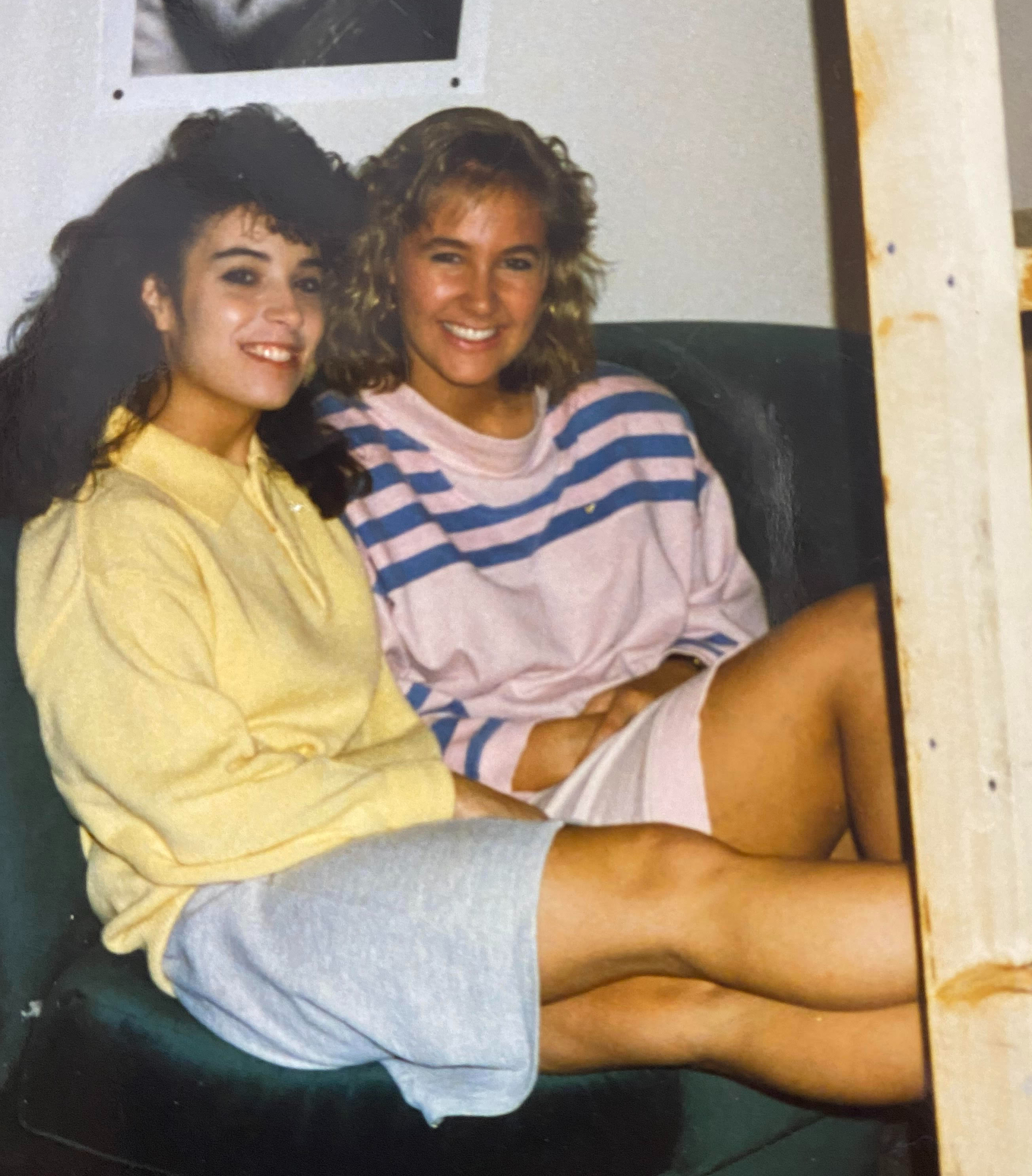
In college, I started drinking in force. God bless my roommate for putting up with me.
When I went off to college, I discovered alcohol; its effects, immediate and transformative. Alcohol washed away perceived inadequacies and anxieties. I could finally exhale. Out from under my parents’ watchful eyes, I could drink as much as I wanted. And I did. From the onset, alcohol had an unyielding grip on me. I called it “partying,” but I was really self-medicating, numbing my nerves and soothing my spirit. I got sicker with every “dose.”
The daughter of an alcoholic father, I was no stranger to addiction. After several blackouts, I knew where I was headed. I made my first call to an 800 helpline sophomore year. They told me to go to 12-step meetings. “No way,” I thought. I had hoped someone could fix me. So much for that. (Fortunately, many schools have since started collegiate recovery communities on their campuses.)
The cycle of insanity worsened. So did the hangovers. Consumed by guilt and plagued by headaches and nausea, I repeatedly promised God, myself, and later, my husband, that I’d stop.
But I had long since crossed a line. I no longer wanted alcohol, I needed it.A baffling compulsion to drink overpowered my fading resolve to quit.
I was a reporter at WAAY-TV in Huntsville, AL when I finally sought help for my addiction to alcohol.
Drinking dominated my life. As a TV reporter in Huntsville, AL, I was driven by adrenaline throughout the day. But by late afternoon, I obsessed about my next drink. I couldn’t wait to get home, where I’d drink two bottles of wine most nights. On weekends, all bets were off. I eventually quit trying to control my intake. My elevator was plummeting.
In 2002, after 15 years in the throes of this progressive disease, I hit my bottom.
One evening, my husband, visibly irritated, said, “I’m sick of you getting drunk every night. For no reason.”
“I am too,” I admitted.
My response surprised us both. In a God-given moment of clarity, I surrendered, crashing through denial, fear, shame, anger and self-loathing. Everyone’s “bottom” is different. For me, there was no DUI, job loss or divorce. Just emptiness, hopelessness and defeat. For nearly half my life, alcohol was my solution. That night, my drug of choice quit working.
By summer 2002, my husband, David, was “sick and tired” of my drinking. Thankfully, I was, too.
I looked in the mirror again, this time softening at the reflection. Finally, I felt compassion, not contempt, for the woman staring back at me.
In that moment, I knew I couldn’t live another day with alcohol, but how could I possibly survive without it?
I pulled out the yellow pages and found a treatment center in Nashville, TN. My words were slurred when I made the call, but my mind was clear: I was an alcoholic and I needed help. I checked into Cumberland Heights on June 21, 2002.
That decision set me on a life-changing course. My 3-pound universe was about to undergo a transformation. But the wires wouldn’t settle and sync overnight. There’s no cure for addiction or the mental health disorders with which I would later be diagnosed. But I’d be okay.
My journey of recovery and self-discovery was just beginning.
More than eight months after I lost my mom, I am grateful I only have two big regrets. The first, not bringing her home to us sooner. The second, leaving two of her rings unprotected at her assisted living facility. She still wore her wedding and anniversary bands, but kept the others in a Tiffany-style box in her bedside table. One featured a ruby surrounded by diamonds; the other, a cluster of diamonds. The stones were small, but each a dazzling reminder of the love with which they were given and received. Years later, both were cold-heartedly stolen.
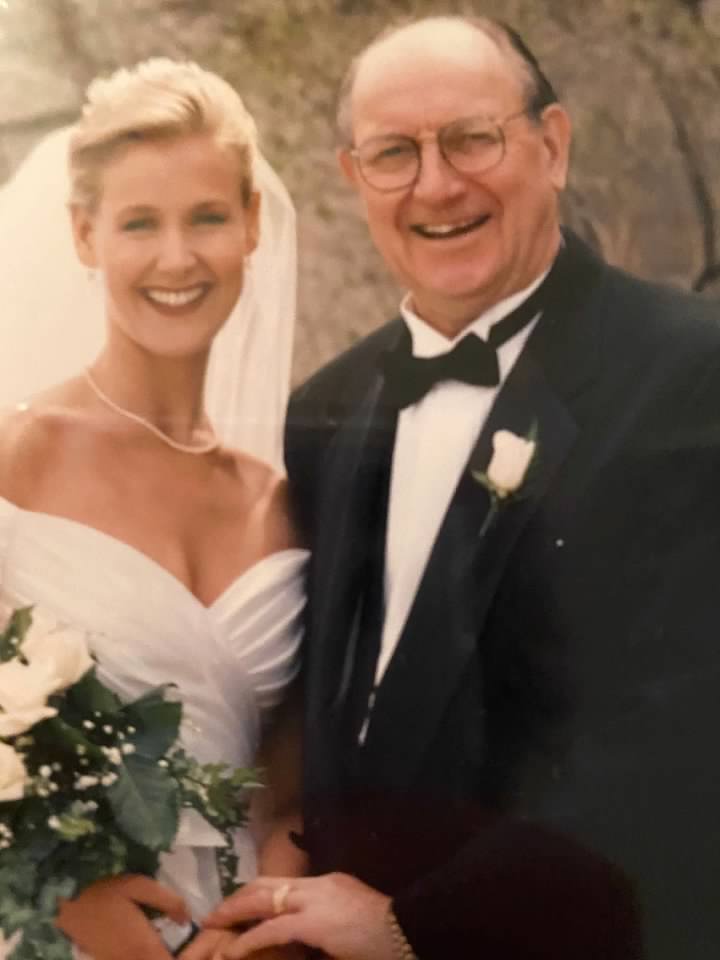
At my wedding, May 4, 1996.
Dad, who died in 2002, was a gregarious man who came to America from Norway with very little. He worked hard and loved showering Mom with gifts, like those rings. Mom, born Sigrun Håheim, also came from Norway. She was a vibrant spirit, bursting with love for God, people, and life.
For years, Mom suffered from peripheral neuropathy, but her health started declining in earnest in early 2019 when she was diagnosed with vascular dementia. Her condition deteriorated further throughout the year. In December, doctors told us she had a spot on her pancreas, Atrial Fibrillation, and a urinary tract infection (UTI). What struck me most wasn’t the dire diagnoses, but her steadfast faith in the midst of them. “I just long to see Jesus,” she said. “To touch His face.” She was ready to go, but had more to endure.
When COVID hit in March, senior living facilities locked down, isolating millions of elderly men and women, including my mom. In April, I had to wish her a happy 86th birthday through a plexiglass screen. In May, she was admitted to hospice and I was granted special visiting privileges. We were reunited! I cherished the hours we spent watching Church services on YouTube, reading the Bible, and just being together.
Last June, my siblings, Heidi and Larry, came to Huntsville for what would be a farewell visit. We stayed together in our house. Mom, who barely spoke in preceding weeks, poured her heart out, declaring her unconditional love and trying to right any wrongs.
Last summer, my siblings came to Huntsville to see, support, and celebrate our mom.
I continued to marvel at her faith. She later shared that she went to bed every night wondering when she’d wake up in her other room, the one Jesus said our Father was preparing for her (John 14: 2-3).
By August, she was extremely weak and frail. We finally brought her home. Two weeks later, on August 28, her breathing changed. I jumped to her side and held her hand, recognizing the guppy-like breaths that indicate end-of-life.
After initially bursting into tears, I pulled myself together. “Mom,” I laughed, “You don’t want your last memory down here to be of me bawling my eyes out.” I flipped the switch, gave her my best smile, and told her how much we loved her. She could go; we’d be okay.
When she slipped away, I could almost see her spirit rising to follow Jesus to her heavenly home. But her earthly absence crushed me. Suddenly, I was the one gasping for air.
The next morning I stepped outside and a female cardinal flew by, hovering near Mom’s window. I smiled, temporarily comforted by the sign. Of course, waves of grief still come and go. Recently, I was driving and missed her terribly. Tears streaming down my face, I cried, “Mom, please tell me it’s real. That you’re in heaven and everything we believe is true.” Moments later, I saw a woman holding a sign that said, “Jesus is coming soon.”
Signs like these assure me that Mom is still here, even though she’s also “there,” in that highly-anticipated other room. As we honor mothers this month, I’ll be sure to give mine the shout-out she deserves. I’m certain she’ll hear me, and respond. I can’t wait to see the sign she sends next.
The COVID-19 pandemic is hurting us all. To date, more than 14,000 thousand people have lost their lives in the United States alone, leaving families immersed in grief and despair. Thankfully, many others have won their battles, or escaped affliction altogether.
The most painful part for me is watching my mother endure the crisis in assisted living. This isn’t an insult to assisted living facilities. Most are taking great strides to keep our parents and grandparents safe. But that doesn’t make it much easier.
A photo of Mom, looking happy and invigorated, November 2018.
Today, April 9, my mom, Sigrun Hovland, turned 86. I won’t be celebrating with her. To protect residents from this dangerous coronavirus, many assisted living facilities are not, under typical circumstances, allowing visitors.
Being alone can be hard. Even the most hard-core introverts may long for a little human interaction after a few weeks of quarantine. I imagine it is especially hard on seniors.
My mom has vascular dementia, which seems to have progressed during the pandemic. She also has severe neuropathy and struggles with depression. Her body and mind are weakening. She’s not eating as much as she should, but she is likely hungrier for emotional nourishment than she is physical sustenance.
My mom is five miles down the road, but it feels as ifwe’re a world apart.
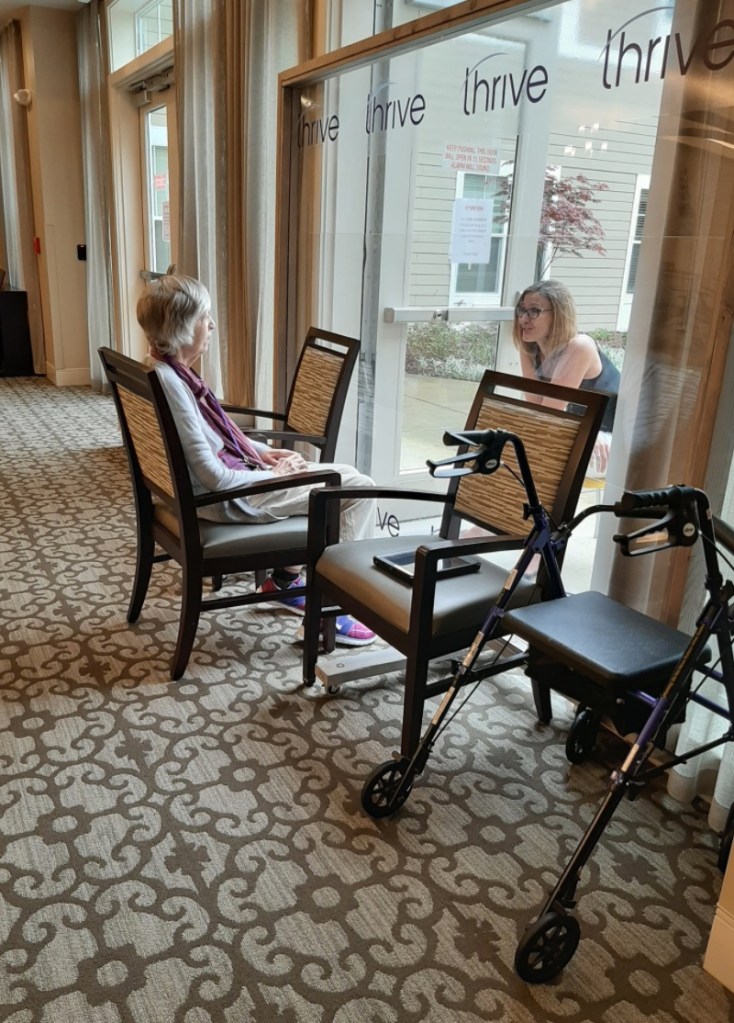
In response, Thrive staffers are creatively trying to connect seniors to loved ones.
Yesterday, I had the opportunity to visit Mom, kind of. She was on one side of a large plexiglass wall and I was on the other. My sister and I joked that it was like a jail visit. But her jailer is a cruel, highly contagious virus.
My mom is a hugger. I couldn’t hug her. But I could smile at her, I could laugh with her, and I might have bent the rules a little — “hugging” her feet with mine through the space at the bottom of the barrier.
Mom, like many people her age, have experienced far more difficult and challenging ordeals throughout their lifetimes.
She was a child in Norway during World War II. She might not remember what sports I played in high school, but she vividly recalls her birthday 80 years ago. It was the day Nazis invaded her beloved homeland. “There will be no birthday celebration today, Sigrun,” her mother had told her.
Today, she will get phone calls from friends and family, along with a special birthday meal delivery. Thrive staff will do their part to provide some birthday cheer, as well.
Still, I’m afraid her 86th birthday will feel similar to her 6th. Today’s is clouded by a very different kind of war, but a distressing battle nonetheless.
Of course, this too shall pass. We have recovered as a family, and as a community — locally, nationally and globally — from much worse.
And this birthday celebration isn’t canceled, it’s just postponed.
In June, as long as conditions allow, my siblings, Larry and Heidi, along with my niece, Rachel, will come to Huntsville to wish her a happy birthday in person. Rachel will bring her baby, Audrey MaeLene, and introduce Mom to her first great grandchild.
Hopefully, by then, we’ll all be back at work, at school or summer camps, and at gatherings with friends and family. Hopefully, health care workers will have a reprieve from exhaustive COVID-19 caseloads.
And hopefully, mom will finally get the chance to hold precious Audrey, hugging her great granddaughter with her whole heart.
Happy New Year, everyone. It’s a big one for me. I headed into 2019 at 50.
Fifty means another year to watch my beautiful daughters grow. Another year to spend with my husband, David. Another year to figure out God’s purpose for my life.
It’s also a year to try something I’ve wanted to do for a very long time: Ride.
I love watching my daughters in their chosen activities. Serina, 13, and Sophia, 11, both play volleyball, a sport I played in high school, and ride horses, something I wanted to do as a kid, but never had the chance.
Sophia jumping Milo at the Jaeckle Centre in February 2018.
I enjoy taking pictures of them in the arena, capturing their joy and humorous antics on camera. But I realize, at 50, it’s not too late for me to experience equestrian-related joy of my own. Not as a spectator, but as a participant.
Some people know that I wanted a horse as a child, but I grew up in a south Minneapolis neighborhood where homes were packed into small rectangular lots, divided by rusted chain-link fences. When I asked for a horse, my dad joked, “Where will we put him? In the garage?”
On road trips, when we drove past horse pastures, I’d ask to stop. We never did. Even so, this pattern continued into adulthood. My boyfriend (now husband) obliged, although he was nervous that a property owner would come out with a shotgun or that one of the horses would take a chunk out of my arm. Neither happened.
Serina on Dillon at Riverdale Farms.
I have often expressed my gratitude for the opportunities afforded aspiring riders, including Serina and Sophia, in North Alabama. There are a handful of wonderful stables within a 20-mile radius of our home. You can board your own horses, take lessons or participate in shows. Even leasing a horse in the Tennessee Valley is reasonable.
My children have been riding for almost seven years and are on the recently-resurrected Pine Ridge Equestrian Team at Pine Ridge Day Camp & Equestrian Center (Disney World has nothing on this place, according to the girls). The friendships and character developed through riding are incredible. Over the past several years, I’ve spent many hours observing, snapping pictures and capturing videos in heat, cold and rain.
As a kid, I not only wanted to ride; I also wanted to fly. When Serina and Sophia jump, they look like they are flying!
Now it’s my turn.
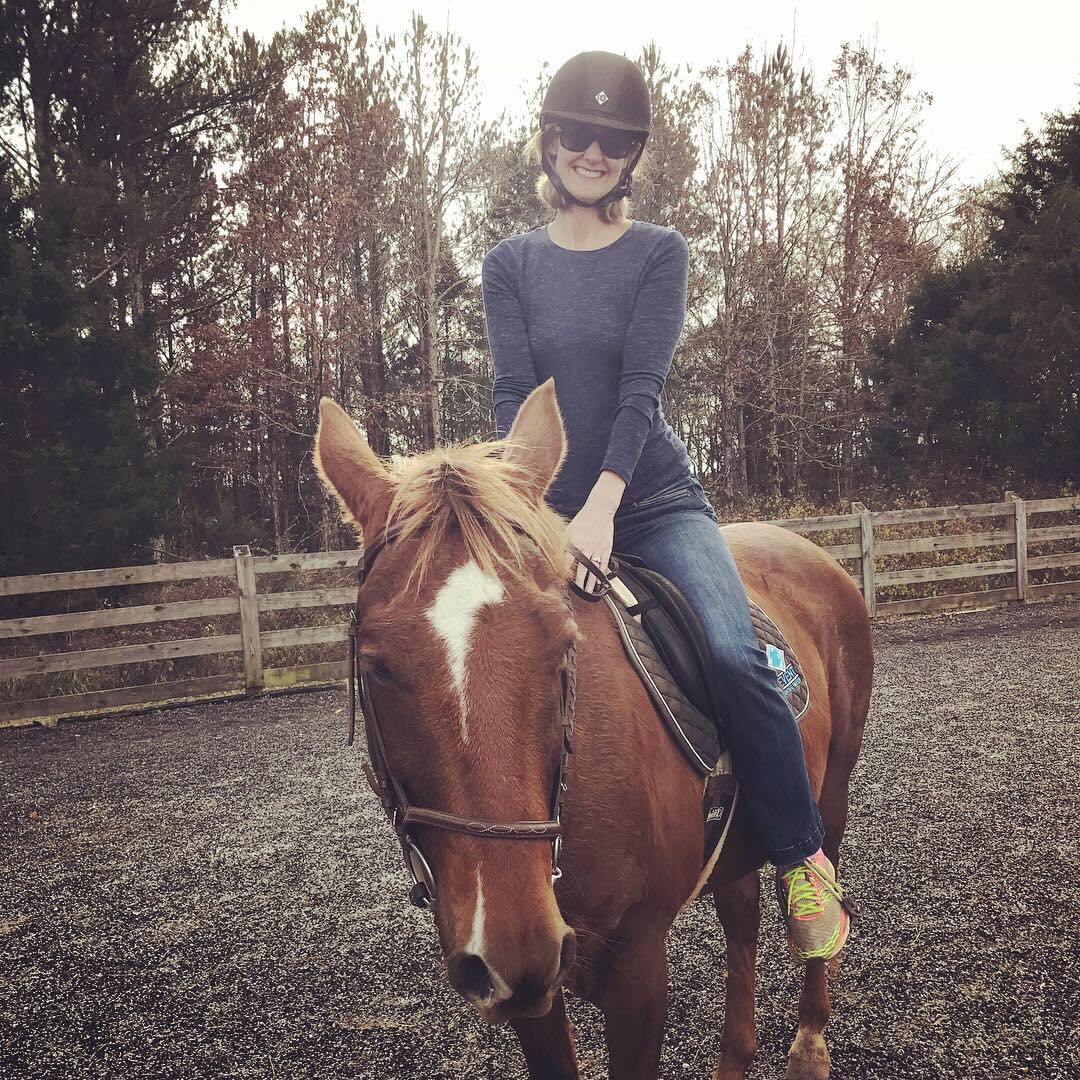
I took a trip around the arena with Milo on New Year’s Eve. I’ll definitely need to invest in more appropriate footwear!
I jumped on Milo, the horse Serina is “partial-leasing” at Pine Ridge on New Year’s Eve and the experience confirmed my 2019 New Year’s resolution. This 50-year-old mom, wife and professional fundraiser is going to learn how to ride.
Sure, it’ll be a while before I get to tackle the 3′ jumps. First, I’ll have to work on my form and figure out what “get the right lead” means. I’ll have to learn to walk, gallop, trot and canter. That’s okay. We all had to crawl before we walked, right?
So in 2019, I resolve to fly. On horseback. And off. I might as well resolve to make this my best year ever. At age 50. With the people I love. Pursuing passions once dismissed.
Jim Pickett was passionate, kind, entrepreneurial, loyal, and spirited. He enjoyed good friends, great food, and lively conversation. But more than anything, he loved my sister, Heidi Hovland, tenderly, unconditionally, and with his whole heart. He loved his kids, Riordan, 12, and Lena, 15, in the same vein.
Such a force on this planet, we never imagined his life would be ripped from ours — from Heidi’s — so soon. Jim was 53 years old when he suffered a massive stroke late last month. There is a huge void where his dynamic spirit once walked, especially in Maplewood, NJ, their home for the past 14 years.
Jim was a serial entrepreneur, building brands, refining recipes for Pickett’s Ginger Beer, and starting companies since he was a business student at Penn State. But that won’t be his legacy. Rather, the love he had for his family and friends may be what strikes people most.
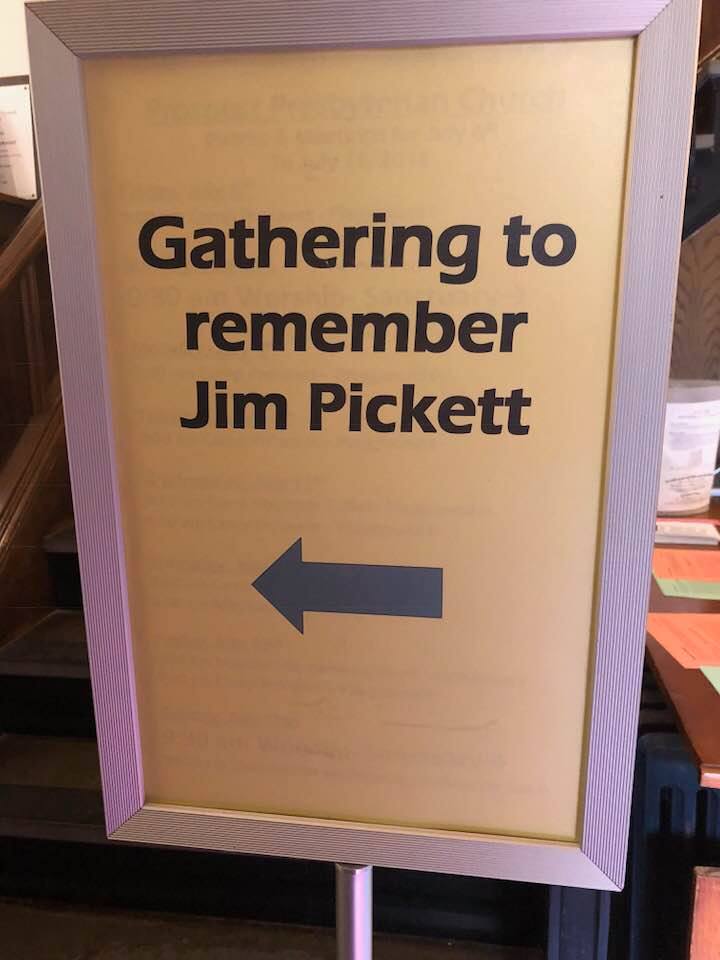
And the love and admiration they had for him! Those from near and far attended a quickly-assembled “Gathering of Remembrance” in Maplewood earlier this month. A standing-room only crowd shared memories from across Jim’s lifetime, depicting a man both well loved and well lived. They highlighted entrepreneurial struggles and triumphs, his remarkable curve ball, and again, his devout loyalty for his friends and unequivocal adoration for his family.
But Jim Pickett’s legacy goes even further. Jim, like many of us, had registered as an organ donor with the DMV.
On July 1st, Jim passed from this world, but his heart continues to beat, his lungs continue to breathe, and his kidneys continue to process. Thanks to Jim’s generosity and selflessness, the wait was finally over for five people desperately awaiting lifesaving organ transplants.
“Only about one percent of people who die are able to go on to be organ donors and about 10 percent of people who die are able to go on to be tissue donors,” said Jacqueline Salvatore, Family Support Coordinator at the NJ Sharing Network. “Jim was able to save lives through organ and tissue donation and we will not know the full extent of the lives he has saved and helped for about a year.”
After Jim died, Heidi initiated the process required to honor his wishes. During a time of chaos, confusion, and insurmountable grief, my amazing sister took the time to clear her mind, learn the process, and make a rational decision that would define his legacy.
The Sharing Network honored Jim by flying a flag signed by friends and family outside Saint Barnabas Medical Center for 24 hours.
Experts say one organ donor can save eight lives and impact another 75 through tissue donation. If more people registered as organ donors, and their families were aware of their wishes, more miracles would arise from tragedy — in New Jersey, in Alabama, where I live, and across the country (according to an article from The New York Times, the situation is especially dire in the Empire State.)
“Our donation numbers in Alabama are improving, but we could transplant additional people if more people said yes,” said Ann Rayburn, Director of Education at the Alabama Organ Center. “Last year we had the highest number of organ donors and organs transplanted in our history. Sadly, there are still nearly 2,500 people waiting for an organ transplant in Alabama today and our kidney transplant waiting list is one of the longest in the country. ”
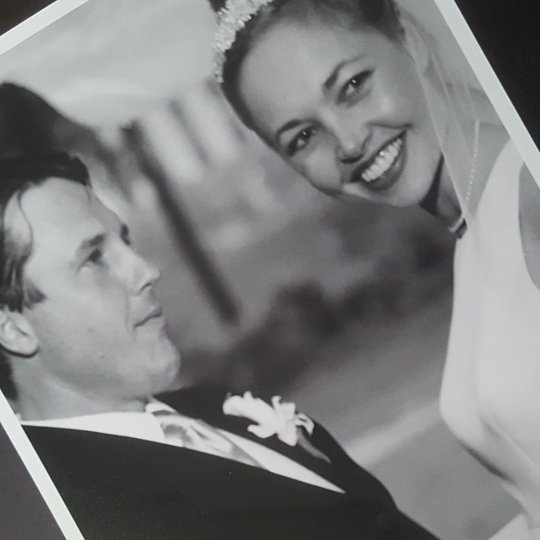
Heidi and Jim at their wedding in 2000.
We are devastated by the loss of a great man. Fortunately, Heidi is strong and resilient, and she can imagine the pleasure Jim would have had knowing that his strong lungs and loving heart are now helping others.
To learn more about organ donation, contact your local organ procurement agency. In New Jersey, visit the Sharing Network; in Alabama, the Alabama Organ Center. To make a donation in Jim’s memory to the NJ Sharing Network, click here and select the tribute option for your gift.
For years, I talked about enrolling our daughters, 10 and 12, in a self-defense class. One mass shooting after another (Sandy Hook, Aurora, Charleston, and Orlando, for instance) was shaking our nation. After each one, I, like so many others, shuddered with horror, mourning the innocent lives lost and feeling absolutely helpless.
I held my children tighter, as I do anytime I hear about a crime against a child, including child abductions. The prospect of someone harming my child terrifies me.
Of course, I know you can’t live in fear, but that doesn’t mean you can’t arm your kids with knowledge, tools and strategies that can help them fight back should they ever find themselves in a dangerous and threatening situation, like an active shooter or abduction attempt.
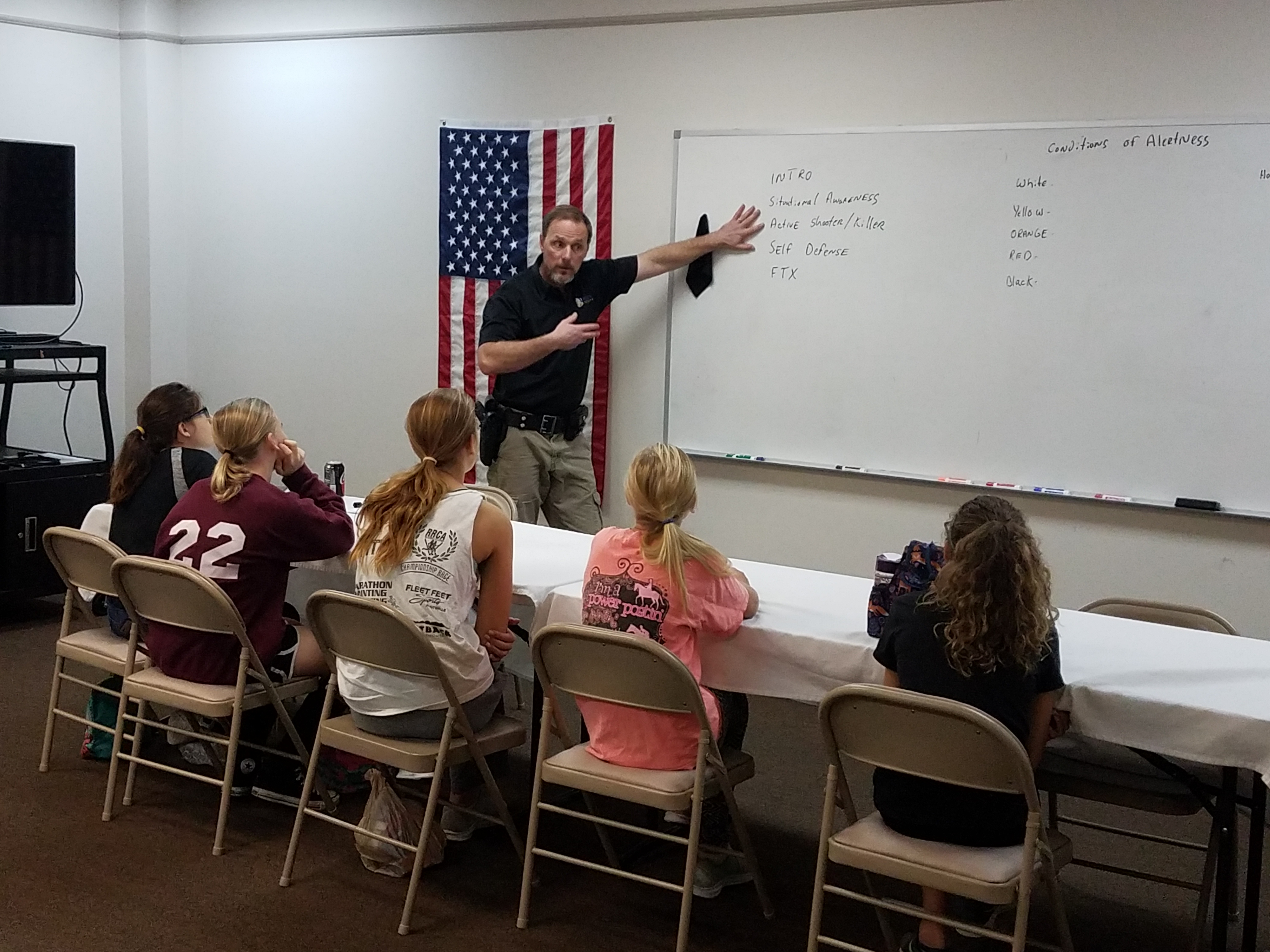
Former Navy Seal Brett Jones instructs several pre-teens on situational awareness and self-defense at his company, Riley Security.
Fortunately, I know an amazing person who understood my qualms. Last weekend, my girls, Serina and Sophia, along with several of their fellow tweeners, took a one-day self-defense and situational awareness training provided by former Navy Seal and CIA operative Brett Jones.
Jones currently works full-time at Riley Security, the company he co-founded in Huntsville. He also works tirelessly to provide self-defense and situational awareness training to folks across North Alabama and beyond.
“It’s a passion I’ve had my whole life,” said Jones. “As a Navy SEAL, CIA agent, or the owner of a security company, I have a passion for protecting people or educating them to protect themselves.”
While Jones has trained many adults over the past 20 years, this was his first go with kids. He did great! Jones started with basic lessons, explaining levels, or conditions, of alertness, or awareness. It starts with white, when you are relaxed and unaware. It can move into yellow, when you are still relaxed, but aware of your surroundings. In Orange, you’ve noticed something that may or may not be a threat to you; you narrow your focus and pay attention.
When you hit red, you’re aware of a definite threat and you:
Run
Hide, or
Fight
In that order. Run as far away from the noise, commotion, or threat as you possibly can. If you can’t run any further, hide. They practiced this, first as a group, with Jones storming into the room. (Serina, our oldest, climbed into a trash can, successfully hiding from the acting assailant.) If you can’t hide, then it’s time to fight.
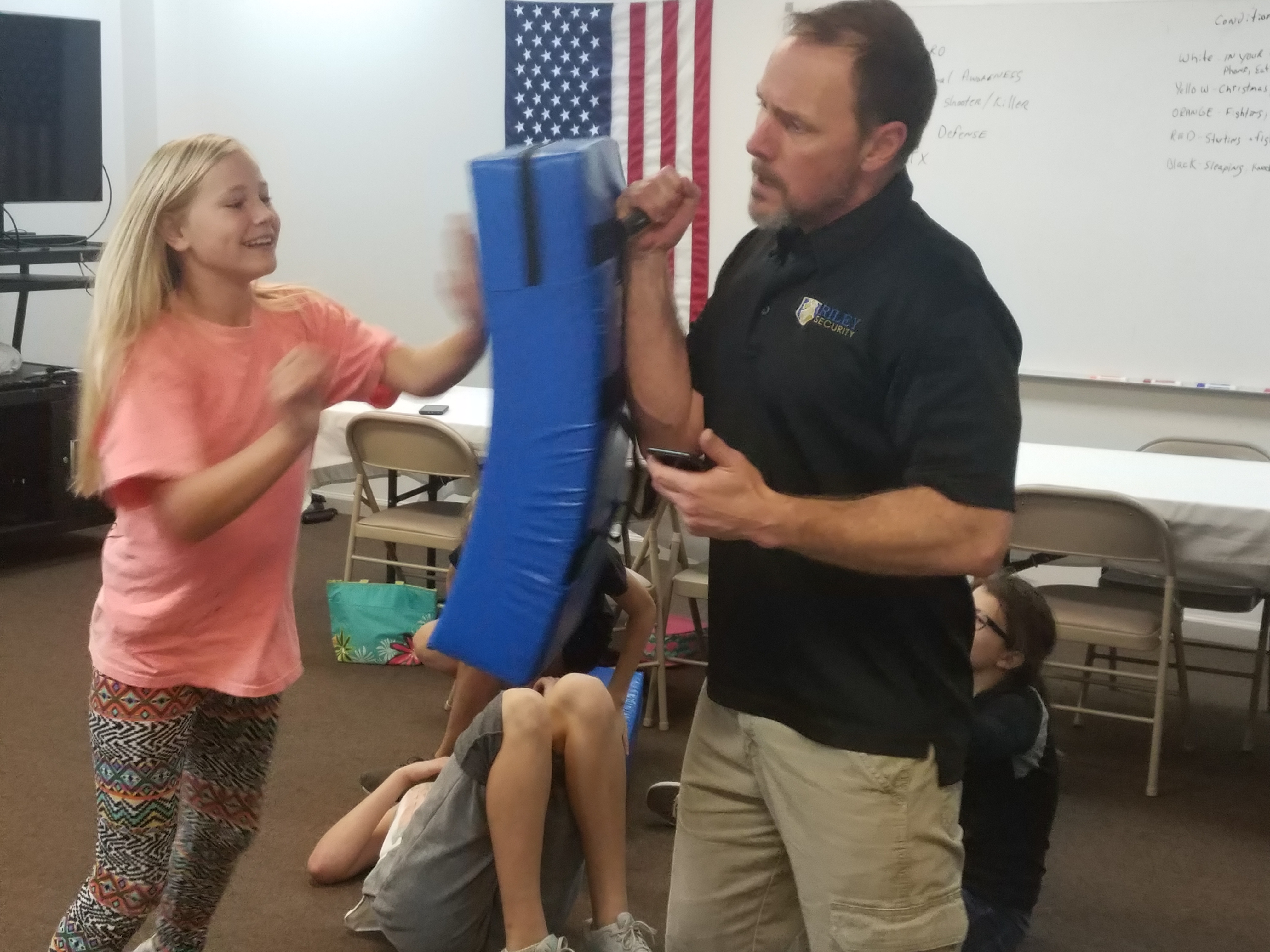
The girls learned how to hit (not with your fist, but with your palm) and where to hit (the face is a key target). Keep hitting, one hand after the other, making sure you keep your non-hitting hand near your face to protect you.
Jones, donning protective “armor,” feigned a threatening situation with each individual child, giving them an opportunity to run, hide and fight.
The girls had a great time, especially when they got to hit a grown man. There was laughter and light-heartedness during the day, but ultimately, they recognized this experience for its serious, potentially lifesaving lessons. I know there are some cases when the most situationally-aware person can’t get away. I also know there are situations in which the best self-defense moves can’t defeat an assailant.
But I also know that this knowledge and these tools can at least give them a greater chance of escaping. Of surviving.
Each time the girls raced out of harm’s way in the scenarios Jones created, or hid in a very clever spot, or managed to outmaneuver the “bad guy,” I saw their confidence grow. My peace of mind grew as well.
If you’re interested in self-defense and/or situational awareness training for your group, business or municipality, email Jones at bjones@rileysecurity.net.
“If it is an entity that is legally required to carry a weapon because of their job, I provide some really great active shooter/killer training for free,” said Jones. “Nobody else in the state is qualified to teach it. It’s good stuff.”
Fortunately, the girls didn’t scare him off. Jones is also looking forward to training more children.
We finally caved and got Serina, our oldest and a member of the so-called Linkster generation, an iPhone when she turned 12. The breaking point was at a volleyball tournament. Everyone on her team had a smartphone (and an Instagram account) except her and one other girl, who was 10. For us, it was time.
But let me be clear: Just because she got a phone didn’t mean it was her phone. I have her passwords and check her accounts, which initially caused many arguments, especially when I discovered she changed her passwords to lock me out. “Mom, there’s nothing on there.” “You don’t trust me.” And so on.
After all, to a teen, a phone signifies independence. It is a sign of growing up. It is a license to communicate freely. And it terrifies me.
My concerns were validated at middle school orientation when the principal not only encouraged, but begged parents to stay on top of their children’s phone use, particularly with social media and text messages.
“Look for signs of depression,” Hasty urged, adding that teachers are instructed to do the same, taking all threats of suicide seriously.
Hasty didn’t go into the subject of online predators, but I am fully aware of those dangers, too.
That night, David and I drew up a contract for our daughters (yes, daughters — we caved again and got Sophia, 10, a phone, too). We started with this: Having a phone is a privilege. Not a right. It is our phone. You simply get to use it. We laid out what constituted violations of this privilege, which included:
Swearing/inappropriate language.
Visiting inappropriate websites.
No phone after 9pm.
Staying in a message group in which someone is locked out/excluded or being bullied. At the onset of any bullying, you will come to us immediately. We will discuss and you will remove yourself from the group. You will block the bully.
Sexting.
Changing your phone password. (If you do change your password, notify your parents of the changes immediately.)
Seeing someone you follow use crude and/or sexual language and not blocking/unfollowing. Warn your friends that if they use this language or participate in any bullying, they will be blocked and, if warranted, we will tell their parents.
We also listed consequences for violating our rules:
1st offense: Lose phone for two days
2nd offense: Lose phone for one week.
3rd offense: Lose phone for three weeks.
4th offense: Lose phone. Period.
As we navigate these rocky new waters, it’s hard to say what will work and what won’t. This is hardly the solution for all social media and smartphone madness, but for us, it’s a start. As we move forward, we appeal to other parents to also “be nosy.”
It still takes a village to raise a child. Today, however, we villagers need to be more vigilant than ever before.