
It’s an age-old question, and a complicated one.
Does Recovery have an end date?
Thanks to Brad Pitt, the idea of “graduating” from abstention to moderation recently made its way back into the headlines.
In an interview with Esquire magazine, the Hollywood icon said he was drinking again after a seven-year stretch of sobriety.
“I can have a few,” Pitt said. “But I can’t have a lot. I have to be professional about it.”
Addiction experts quickly weighed in, some with warnings about relapse and others reminding us that recovery is highly personal. Alcohol Use Disorder falls on a spectrum with key DSM factors determining where someone lands. In short, what works for one might not work for another.
Regardless, Pitt’s interview also got the general public buzzing. If Brad Pitt can drink again, can’t other people with long-term sobriety?
In fact, after hearing Pitt’s revelation, someone asked my sister, “After all these years (of sobriety), don’t you think Karen can drink again… in moderation?
Honestly, I’ve pondered that possibility myself, especially in the beginning.
When I got out of treatment, a friend and I watched My Big Fat Greek Wedding. Do you remember the scene where everyone was downing shots of ouzo? Most people laughed, but my heart sank as I realized I wouldn’t be able to drink at my children’s wedding.
Keep it mind, I didn’t have kids at the time, nor did I know if I’d ever have them.
Besides, when I drank, I blew right past the joyful celebrations into slurred speech and blackouts.
But could I find joy and laughter in sobriety? I was determined to find out.
My treatment plan included 12-step meetings, where I openly shared my fear of not drinking at my imaginary child’s wedding some 20-plus years down the line. That’s when the so-called old-timers reminded me to focus on today. The present. The next 24 hours.
Sometimes, when even that was too much, I’d zero in on the next five minutes. Those meetings, and the people in them, saved me.
Don’t get me wrong. There were times I didn’t think I could sit through another 60 minutes of blah, blah, blah with so-and-so sharing the same stories over and over again.
Surely these meetings can’t be my life, I thought.
But I kept going, and here I am, 24 years later, still sober and probably sharing some of my same stories. Over and over again.
Today, these meetings aren’t my life, but they helped me reclaim my life. I love the fellowship, the sharing, the celebrations. The support.
I no longer blow past the joyful celebrations. I relish and remember them.
My program pulled me through tough times, too. Like my dad, a fellow alcoholic, dying four months into my sobriety. Or losing my coveted job as a TV News Reporter/Anchor eight days shy of my one-year sobriety date.
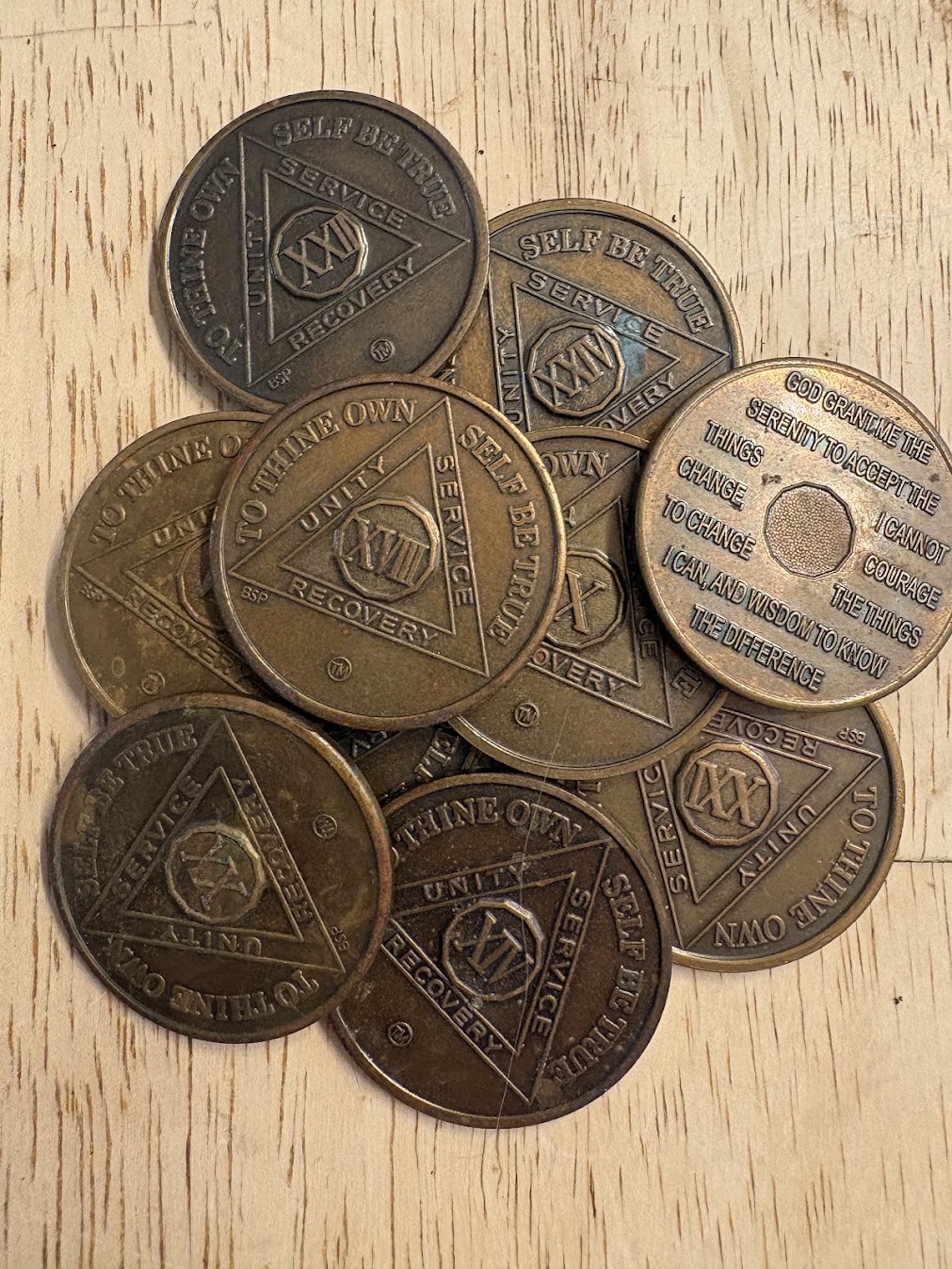
But drinking would have made those hardships worse. Not better.
How do I know? “Bill” told me.
“Bill” was an older guy who was at almost every meeting I attended those first few years. He often described his early struggles to stay sober. How he’d think he could drink again, only to face multiple relapses, each worse than the one before. He said he couldn’t drink like a normal person. No matter how much he wanted to. No matter how hard, or how many times, he tried.
While he passed some years ago with decades of sobriety, I can still hear his voice: “I went back out so you don’t have to.”
His experience isn’t uncommon. People with six months, six years, or more come back to “the rooms” after having a drink, which led to another and another. Many who return describe the nightmare benders that followed.
Not everyone makes it back. The deadliness of the disease isn’t lost on any of us.
That’s not to say others haven’t found balance. I’ve known a few of those too. They decided they were able to drink in moderation after all, and by all appearances, alcohol no longer dominates their lives.
I can only speak for myself. And I don’t want to experiment. I’ll take a lot of chances in my life, but I won’t roll the dice on my sobriety.
I tried “controlled” drinking for 15 years, failing repeatedly until June 21, 2002, when I made what felt like a life-and-death decision and drove myself to a treatment center in Nashville, Tennessee.
When the prospect of drinking again arises, I ask, “Why would I risk the life I’ve worked so hard to rebuild on a substance that nearly destroyed me?”
Besides, I never wanted a glass or two of wine. Not even the first time I got drunk and experienced a blackout. I was 15. After the first sip of anything, a switch flipped in my brain. I imagine it still would.
One drink was never enough. But always too much.
Too much for my mind. For my body. For my spirit. For my loved ones.
While I haven’t touched a drink for 24 years, today is really all that matters.
I drank myself into oblivion for too long. Nothing, not even the possibility of drinking a glass of champagne at my daughters’ weddings (now that I actually have children–with potential life partners) is worth going back there.
So to the question: Does my recovery have an end date?
Maybe. Maybe not.
But I sure as hell don’t want to find out.
*NOTE While a 12-step program worked for me, it’s not for everyone. Thankfully, there are lots of different recovery paths that help others achieve and maintain sobriety.


