
Matthew Perry’s memoir hit me hard. The stretches of sobriety, heartbreaking relapses, and deeply-rooted resentments. Sure, there were moments of levity, laughter, and hope, fueled by Perry’s sheer determination to keep fighting, but there was an eerie sense of foreshadowing throughout the book.
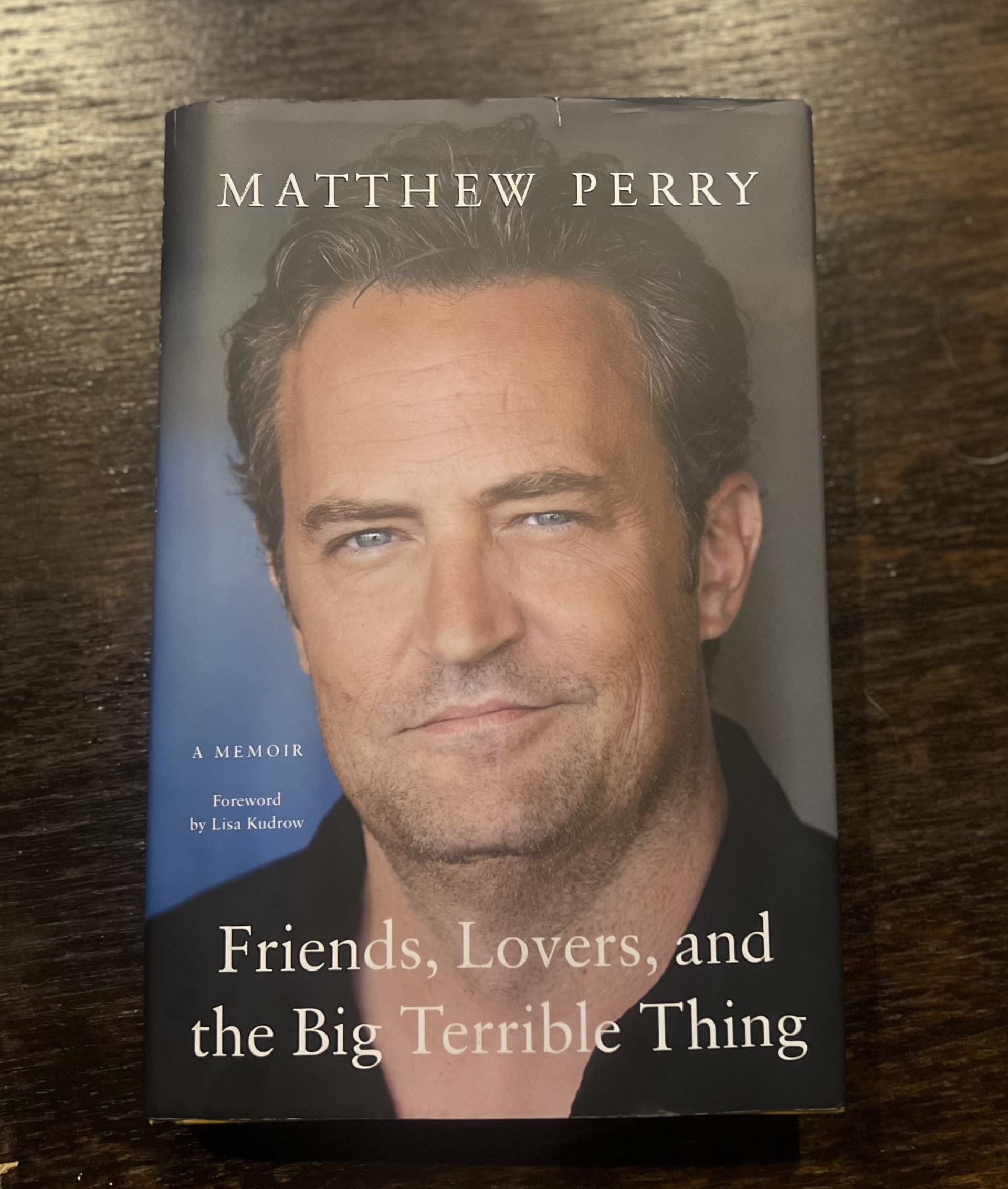
Chances are we’ll all read, and respond to, the book differently. We’re all coming from different places. I, for one, found “Friends, Lovers, and the Big, Terrible Thing” both relatable and unrelatable; heartwarming and frustrating; honest and dishonest. And ultimately, tragic.
Because we all know how his story ends.
On October 28, I was among millions of “Friends” fans saddened when I heard that Perry had passed away. Gen-Xers like me grew up with Chandler Bing and his crew, from our 20s into our 30s. I watched every week, usually with a bottle of wine. For most of the show’s run, I was stuck in the insanity of my addiction and Perry was in the thick of his. We both went to treatment in 2002. While my recovery journey hasn’t been perfect, I’ve managed to stay sober. That is a gift I don’t take for granted.
As Perry shared in his memoir, he would continue fighting, mostly alcohol and opioids, for decades, spending $7 million on treatment. While I had it bad (of course, few in active addiction “have it good”), he had it “really bad,” saying on page 220, “I have it as bad as you can have it, in fact. It’s backs-to-the-wall time all the time. It’s going to kill me.”
But would it? His death didn’t initially appear to be drug-related. After all, we, the public, thought he was sober. That was how the book ended.
Perry published the book in 2022, telling “People” magazine why he didn’t write his story earlier. “I wanted to share when I was safe from going into the dark side of everything again,” he said. “I had to wait until I was pretty safely sober… to write it all down.”
Pretty safely sober.
What does that mean? To me, “pretty safely sober” is a reminder that the one-day-at-a-time thing is no joke. That meetings, the 12 steps, or whatever recovery path you’re on are as critical to your health and well-being as recovery plans for other illnesses.
Because, as Perry explained in the memoir, while you are working on your sobriety, the disease of addiction is doing one-armed push-ups, just waiting for you to let your guard down. To think you are safe, that’s where relapse comes in, which Perry describes this way: “Once you puncture the membrane of sobriety, the phenomenon of craving kicks in, and you’re off to the races one more time.”
Maybe that’s why we were sad, but not entirely surprised, when the autopsy report, released December 15, said that Perry died from the “acute effects” of ketamine. It’s a powerful anesthetic that the Drug Enforcement Agency describes as “dissociative” because it makes patients feel detached from their pain and environment.
On Octobber 10, two weeks before Perry’s passing, the FDA issued a warning about compounded ketamine, and reminded patients and healthcare workers that it is not FDA approved. A study published by the National Library of Medicine says that ketamine’s psychotropic effects have demonstrated benefits, particularly as an antidepressant, but “unsupervised ketamine treatment is dangerous, debatable, and extremely worrying.”
On page 83, Perry talks about his experience with the drug in 2020, “I was also doing ketamine every day… There’s a synthetic form of it now, and it’s used for two reasons. To ease pain and help with depression. Has my name written all over it–they might as well have called it ‘Matty.’ Ketamine felt like a giant exhale.” But there were negatives. “Taking K is like being hit in the head with a giant happy shovel. But the hangover was rough and outweighed the shovel. Ketamine was not for me.”
Yet it killed him, once again demonstrating the power of this disease.
(Perry had been on medically-supervised Ketamine infusion therapy, which is considered safe, but his last treatment was reportedly a week-and-a-half earlier. That dosage, experts say, would have been long gone by the time he died.)
In the book, Perry frequently asks, “Why am I still here?” After all, the disease had already killed many of his Hollywood peers. “It always seems the really talented guys go down,” he said, referencing the likes of River Phoenix. Michael Jackson. Heath Ledger, and Chris Farley.
More frightening foreshadowings of his demise.
Perry eventually sensed “that I was here for more than this big terrible thing. That I could help people, love them, because of how far down the scale I had gone…”
That’s what’s scary about the scale. It can always go down further.
While Perry is no longer with us, his story can continue to help others, reminding all of us that we can fight and fight and fight, but addiction can still win. We are never really safe.
**************************************
If you are struggling with addiction, you can call 800-662-4357. You can also visit Not One More Alabama for local and regional treatment resources, including WellStone, or check out Alcoholics Anonymous, Narcotics Anonymous, Recovery Dharma, or Celebrate Recovery.


 minndixiemom